
The aroma of a warm, simmering pot can transport me to distant lands; today, I’m eager to share a delightful recipe for Persian Noodle Soup, known as Ash Reshteh. With its fragrant blend of turmeric, garlic, and fresh herbs, this soup not only captures the essence of comfort food but also serves as a nourishing, plant-based meal perfect for chilly nights. Packed with protein-rich lentils, hearty beans, and tender noodles, it checks all the boxes for a quick dish that doesn’t compromise on flavor or nutrition. Whether you’re a seasoned home cook or just looking for a cozy dinner option, this recipe promises to fill your kitchen with happiness and warmth. Ready to dive into a bowl of comfort? Let’s explore how to create this timeless dish that transcends cultural boundaries!
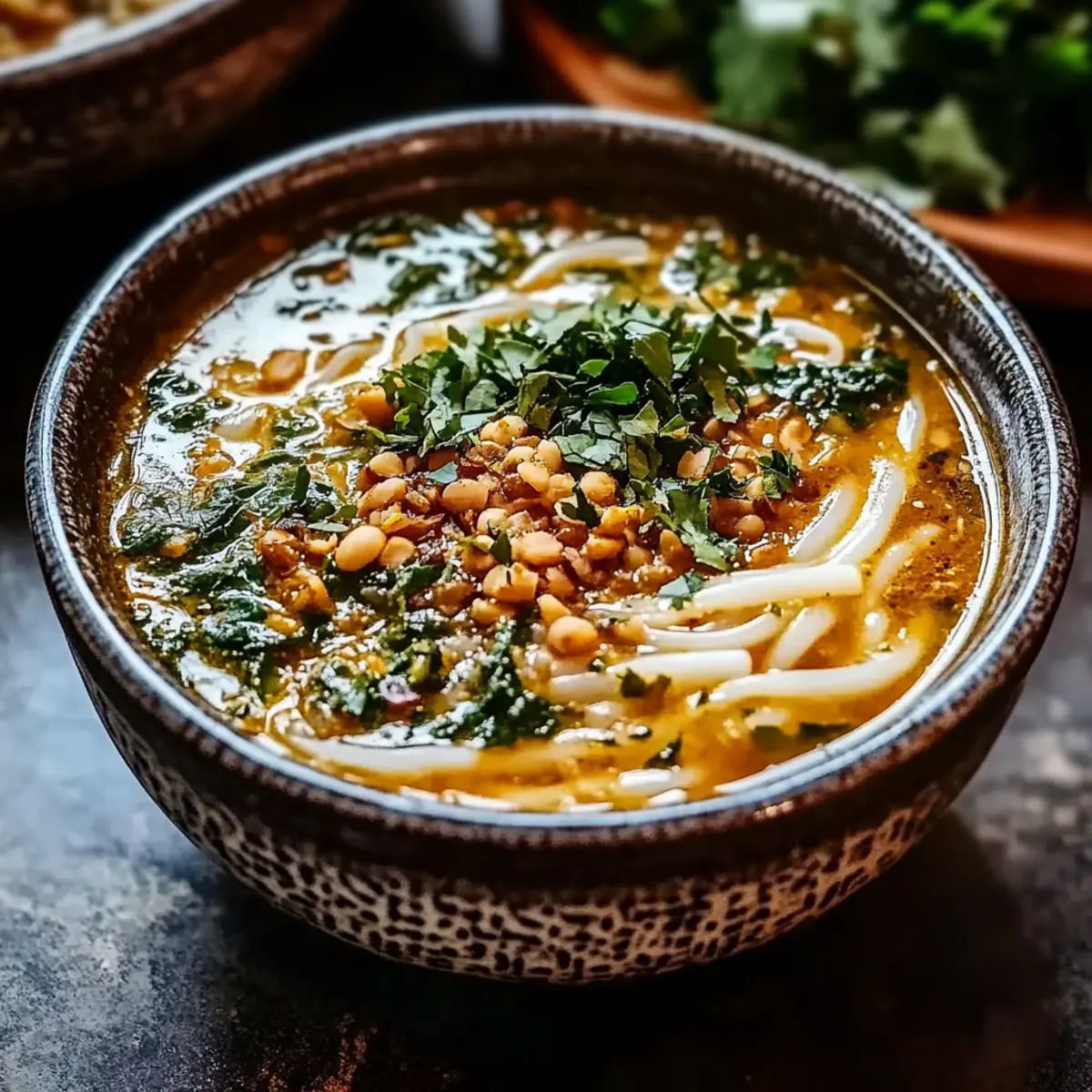
Why is Persian Noodle Soup so special?
Comforting flavors greet you with every spoonful of this hearty dish. Plant-based goodness shines through with ample beans and greens. Nourishing ingredients like lentils pack in the protein, making it perfect for anyone seeking wholesome meals. Versatile at its core, substitute noodles or herbs to suit your taste. Craving warmth? This recipe is also a fantastic way to embrace a cozy night in—just like a bowl of our popular Vegetable Soup Wholesome! Enjoy it paired with crusty bread for a complete feast. Dive into the rich cultural heritage of Ash Reshteh and savor a comforting dish that uplifts both body and spirit.
Persian Noodle Soup Ingredients
• For a comforting, nourishing dish.
For the Soup Base
- Olive Oil – Adds richness and is perfect for sautéing; substitute with vegetable oil if needed.
- Onion – Provides a sweet base flavor; shallots or leeks can be used for a milder taste.
- Garlic – Enhances aroma and flavor; fresh garlic is best, but garlic powder can work in a pinch.
- Turmeric – Offers warmth and earthy flavor; a wonderful source of health benefits.
- Vegetable Broth – The soup’s liquid base; opt for low-sodium to control salt levels.
For the Protein and Texture
- Lentils – Adds protein and texture; green or brown lentils work beautifully.
- Chickpeas – Introduces heartiness; canned chickpeas make for quick prep.
- Navy Beans – Contributes to soup’s creaminess; can substitute with any white beans.
- Kidney Beans – Brings color and flavor; swap with pinto beans for a delightful twist.
- Persian Noodles or Linguine – Offers essential texture; linguine is a great alternative if Persian noodles aren’t available.
For the Greens and Herbs
- Spinach – Boosts nutrients and color; kale or Swiss chard can serve as substitutes.
- Cilantro – Brightens flavor; fresh parsley can provide a different herbaceous touch.
- Parsley – Adds freshness; dill can work for those looking for a more distinctive taste.
- Dill – For an aromatic flavor; feel free to omit if you prefer.
For Seasoning and Topping
- Salt and Pepper – Enhance flavor to taste; adjust according to the saltiness of the broth.
- Sour Cream or Yogurt – Adds creaminess when serving; a plant-based yogurt keeps it dairy-free.
- Fried Onions – For an irresistible crunch as a garnish; optional for a lighter dish.
Every bowl of Persian Noodle Soup will wrap you in warmth and nourishment—perfect for any occasion!
Step‑by‑Step Instructions for Persian Noodle Soup
Step 1: Sauté the Base
In a large pot, warm 2 tablespoons of olive oil over medium heat until shimmering. Add 1 chopped onion and sauté for about 5-7 minutes until it becomes soft and golden brown, stirring occasionally. This aromatic base adds a depth of flavor to your Persian Noodle Soup, setting the stage for all the delicious ingredients to follow.
Step 2: Add Aromatics
Stir in 4 minced garlic cloves and 1 teaspoon of turmeric into the sautéed onions, cooking for another 1-2 minutes. Keep stirring until you smell a wonderful fragrance filling your kitchen, indicating that the garlic is golden and aromatic. This step infuses the Iranian flavors essential to the comforting profile of the Ash Reshteh.
Step 3: Introduce the Broth and Legumes
Pour in 8 cups of vegetable broth, quickly followed by 1 cup of rinsed lentils, 1 can of drained chickpeas, 1 cup of navy beans, and 1 cup of kidney beans. Bring the mixture to a boil over high heat, then reduce the heat to a simmer. Let it cook uncovered for about 20 minutes, until the lentils are tender and the broth is rich and flavorful.
Step 4: Cook the Noodles
After 20 minutes, add 8 ounces of Persian noodles (or linguine) directly into the pot. Stir gently to ensure the noodles are submerged, then continue to cook for an additional 10 minutes. As the noodles cook, they will soak up the savory flavors of the broth, blending beautifully into your Persian Noodle Soup.
Step 5: Fold in the Greens and Herbs
Next, stir in 4 cups of fresh spinach, along with ½ cup of chopped cilantro, ½ cup of parsley, and 2 tablespoons of dill. Cook for another 5-7 minutes on low heat, just until the greens wilt and meld with the soup. This vibrant addition not only boosts nutrition but also provides a fresh pop of color.
Step 6: Season to Taste
With everything combined, season your soup generously with salt and pepper to taste. Start with a teaspoon of salt and adjust as needed, considering the saltiness of your broth. This final step enhances the comforting and nourishing qualities of the Persian Noodle Soup, ensuring it is just right for your palate.
Step 7: Serve with Garnishes
Ladle the hot soup into bowls and top each serving with a dollop of sour cream or yogurt, and a sprinkle of crispy fried onions for texture. This delectable addition complements the hearty flavors of the Ash Reshteh beautifully, making your Persian Noodle Soup a true feast for the senses!
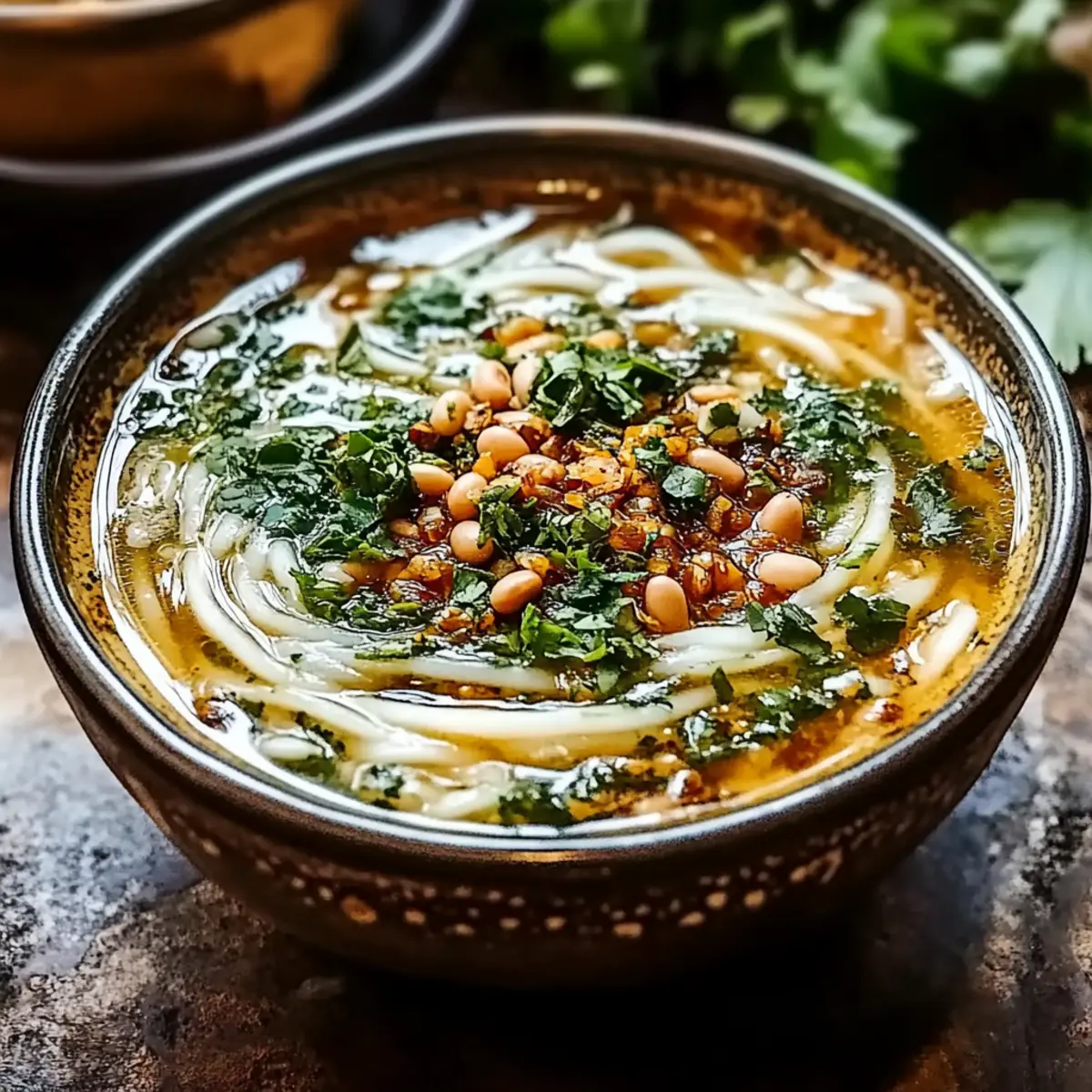
Variations & Substitutions for Persian Noodle Soup
Explore delicious twists to make this Persian Noodle Soup your own, enhancing flavors and dietary preferences!
-
Gluten-Free Pasta: Swap Persian noodles for gluten-free pasta to enjoy a similar texture without gluten. This way, everyone can savor this comforting dish without any worries!
-
Add More Legumes: Feel free to mix in other legumes like black beans or lentils for extra protein. Each legume adds its unique taste, enriching the soup with layers of flavor.
-
Herb Blend: Consider using seasonal herbs like basil or mint instead of cilantro and parsley for a fresher taste. These substitutions can transform your soup with a bright aromatic twist!
-
Veggie Boost: Throw in chopped carrots or zucchini for added texture and nutrition. These vegetables will complement the beans beautifully while making your soup even heartier.
-
Spicy Kick: If you crave some heat, add red pepper flakes or diced jalapeños while sautéing the onions. This fiery touch can make each spoonful an exciting experience.
-
Creamy Base: Use unsweetened coconut milk instead of vegetable broth for a creamy twist. It lends a subtle sweetness that pairs nicely with the turmeric and spices, offering a different flavor profile to enjoy.
-
Nutty Flavor: Stir in a tablespoon of tahini for a creamy and nutty richness. This variation elevates the soup, bringing a Middle Eastern flair similar to what you’d find in traditional recipes.
-
Top it Differently: Instead of sour cream or yogurt, try serving with a drizzle of tahini sauce or a sprinkle of feta cheese for unique flavor notes. Each option leaves a lasting impression that enhances the overall dish!
Remember, cooking is about creativity—feel free to experiment! If you’re looking for other warming soup recipes, check out our Mushroom Chicken Soup or dive into a heartwarming Vegetable Soup Wholesome. Your taste buds will thank you!
How to Store and Freeze Persian Noodle Soup
Fridge: Store leftover Persian Noodle Soup in an airtight container for up to 5 days. The flavors actually improve after a day, making it even more delicious!
Freezer: For longer storage, freeze the soup without noodles and fresh herbs. It keeps well for up to 3 months; just thaw in the fridge before reheating.
Reheating: When ready to enjoy, reheat in a pot over medium heat, adding a splash of vegetable broth or water to adjust the consistency as needed.
Room Temperature: Avoid leaving the soup out for more than 2 hours to ensure food safety and maintain its nourishing qualities.
Expert Tips for Persian Noodle Soup
-
Use Fresh Ingredients: The flavor of your Persian Noodle Soup will shine brighter with fresh herbs and garlic; dried alternatives lack their aromatic depth.
-
Control Consistency: If your soup turns out too thick, gradually add more vegetable broth or water until you reach your desired consistency.
-
Don’t Overcook Greens: Add spinach and herbs towards the end to ensure they remain vibrant and nutrient-rich, enhancing the healthy aspects of your soup.
-
Herb Variations: Feel free to play with different herbs in your Persian Noodle Soup—experimenting with basil or mint can give the dish a delightful twist!
-
Storing Leftovers: Leftover soup can be stored in an airtight container for up to 5 days. For optimal flavor, enjoy it a day after it’s made when the ingredients have melded beautifully.
-
Freezing Tips: If you plan to freeze your soup, leave out the noodles and fresh herbs to prevent mushiness upon reheating.
Make Ahead Options
This Persian Noodle Soup (Ash Reshteh) is a fantastic choice for meal prep enthusiasts! You can prepare the soup base (without the noodles and herbs) up to 3 days in advance, allowing the flavors to meld beautifully while stored in an airtight container in the refrigerator. Additionally, you can refrigerate the chopped spinach, cilantro, and parsley separately for up to 24 hours to maintain their freshness. When you’re ready to serve, simply reheat the soup base over medium heat, stir in your noodles, and add the greens, cooking until everything is hot and the noodles are tender. This approach ensures a quick, nourishing meal that tastes just as delicious as when freshly made!
What to Serve with Hearty Persian Noodle Soup
Elevate your dining experience with delightful accompaniments that enhance the comforting flavors of this nourishing dish.
-
Warm Flatbreads: Enjoy the pleasure of tearing into soft, warm flatbreads. They are perfect for dipping into the rich broth of your soup!
-
Crisp Garden Salad: A fresh mix of greens with a tangy vinaigrette adds a refreshing crunch, balancing the richness of the noodles and beans beautifully.
-
Savory Rice Pilaf: Fluffy rice pilaf seasoned with herbs and spices complements the hearty soup, creating a satisfying and comforting meal.
-
Roasted Vegetables: Caramelized seasonal vegetables provide a wonderful textural contrast while bringing out the earthiness of the soup’s flavors.
-
Herbed Yogurt Sauce: A cool, tangy herbed yogurt sauce offers a bright contrast to the warm soup, enhancing its richness with a refreshing touch.
Pairing these delightful sides with your Hearty Persian Noodle Soup will create a truly memorable dining experience filled with warmth and flavor.
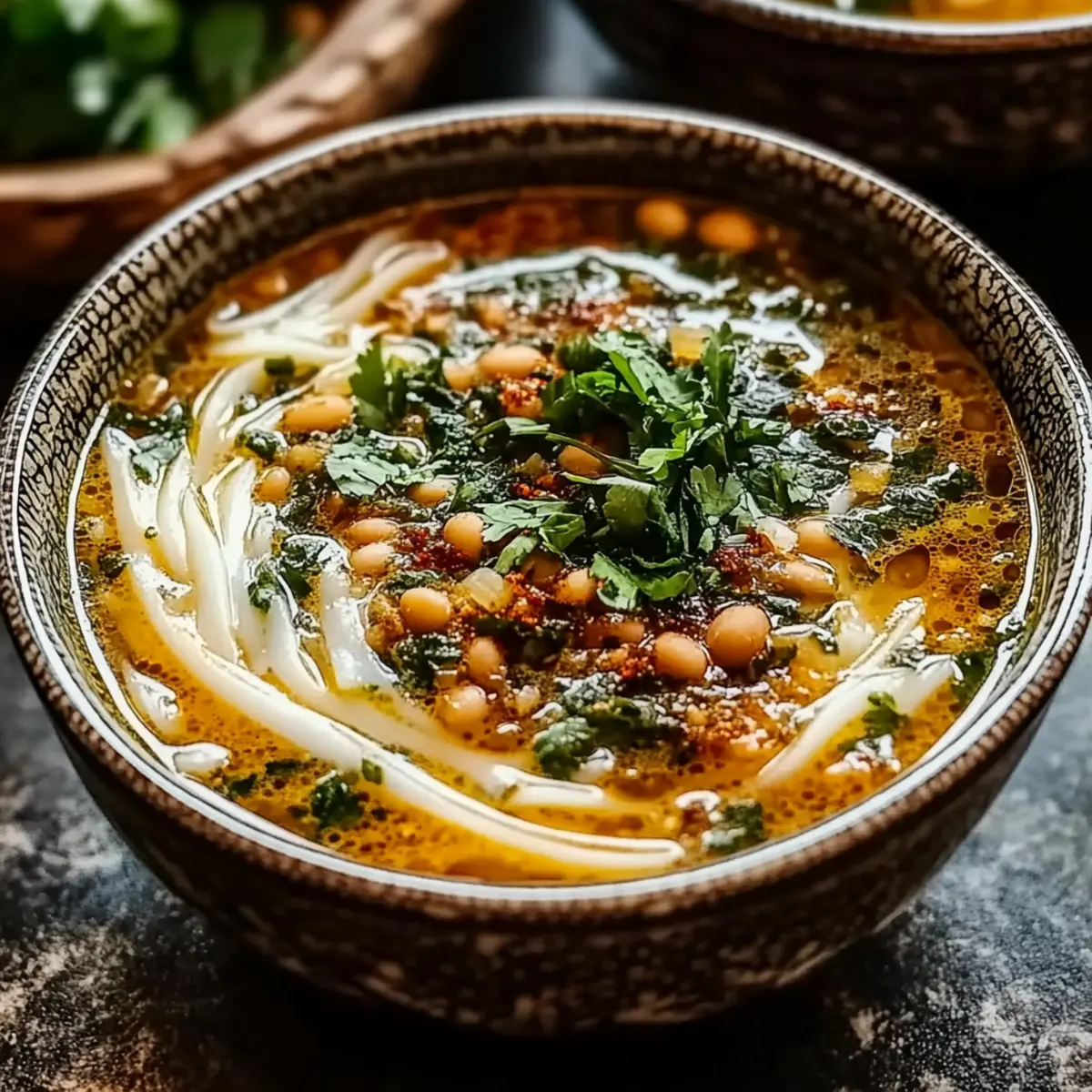
Persian Noodle Soup (Ash Reshteh) Recipe FAQs
What type of noodles can I use for Persian Noodle Soup?
You can use traditional Persian noodles, but if they aren’t available, linguine is a fantastic substitute. Both options will provide that necessary texture and comfort. Just remember to cook the noodles until tender, and they’ll soak up all the wonderful flavors of the soup!
How should I store leftover Persian Noodle Soup?
Store your leftovers in an airtight container in the fridge for up to 5 days. It’s actually a fantastic option to let the soup sit for a day before enjoying it – the flavors meld beautifully!
Can I freeze Persian Noodle Soup?
Absolutely! I recommend freezing the soup without the noodles and fresh herbs to prevent them from becoming mushy. You can freeze it for up to 3 months. When you’re ready to enjoy it, simply thaw it overnight in the fridge, reheat gently, and then add cooked noodles and herbs before serving.
What should I do if my soup is too thick?
If your soup turns out to be thicker than you expected, don’t worry! Gradually stir in some additional vegetable broth or water until you reach a consistency that’s perfect for you. It should remain hearty, but not so thick that it feels heavy!
Are there any dietary considerations for Persian Noodle Soup?
This soup is naturally plant-based and high in protein due to the lentils and beans, but if you need to accommodate allergies, make sure to check for specific ingredient sensitivities, especially for legumes. Additionally, for a gluten-free option, substitute with gluten-free noodles. Always consult with your doctor or a nutritionist if you have specific dietary needs!
How long should I cook the beans if using dried ones?
If you opt for dried beans instead of canned, begin by soaking them overnight in water. After soaking, they typically need around 1-2 hours of simmering until tender. Adjust your cooking time according to the type of beans you use. This prep ensures you have perfectly cooked beans that integrate beautifully into your Persian Noodle Soup!
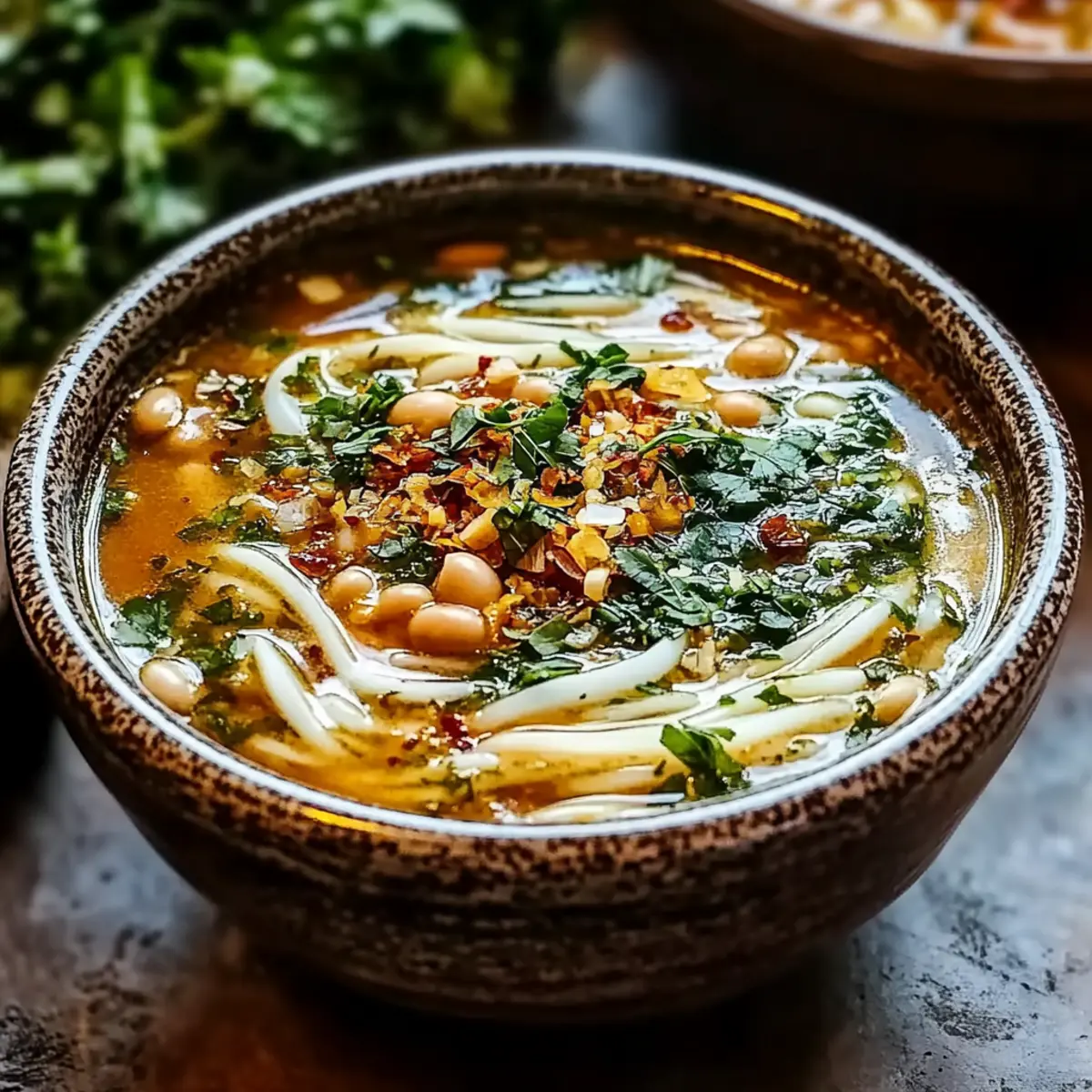
Delicious Persian Noodle Soup for Ultimate Comfort and Nourishment
Ingredients
Equipment
Method
- Warm 2 tablespoons of olive oil over medium heat in a large pot until shimmering. Add 1 chopped onion and sauté for about 5-7 minutes until soft and golden brown.
- Stir in 4 minced garlic cloves and 1 teaspoon of turmeric into the sautéed onions, cooking for another 1-2 minutes.
- Pour in 8 cups of vegetable broth followed by 1 cup of rinsed lentils, 1 can of drained chickpeas, 1 cup of navy beans, and 1 cup of kidney beans. Bring to a boil, then reduce to simmer for 20 minutes.
- Add 8 ounces of Persian noodles or linguine to the pot and stir gently. Cook for an additional 10 minutes.
- Stir in 4 cups of fresh spinach, ½ cup of chopped cilantro, ½ cup of parsley, and 2 tablespoons of dill. Cook for another 5-7 minutes on low heat.
- Season the soup with salt and pepper to taste, starting with 1 teaspoon of salt and adjusting as necessary.
- Ladle the hot soup into bowls and top with a dollop of sour cream or yogurt, and crispy fried onions.
Leave a Reply