
As I stood in my kitchen, the earthy aroma of sautéing garlic and ginger whisked me away to a cozy café in the heart of Seoul. My latest culinary endeavor, Gochujang Chickpea Soup, is a delightful one-pot meal that effortlessly marries spice and comfort. With just 10 minutes of prep time and only 25 minutes on the stove, this vegan soup brings both warmth and nourishment to your table. Not only is it packed with protein and fiber from hearty chickpeas and quinoa, but it’s also a quick and satisfying solution for those weeknight dinners when you crave something wholesome yet uncomplicated. Are you ready to elevate your soup game with this appetizing bowl of goodness?
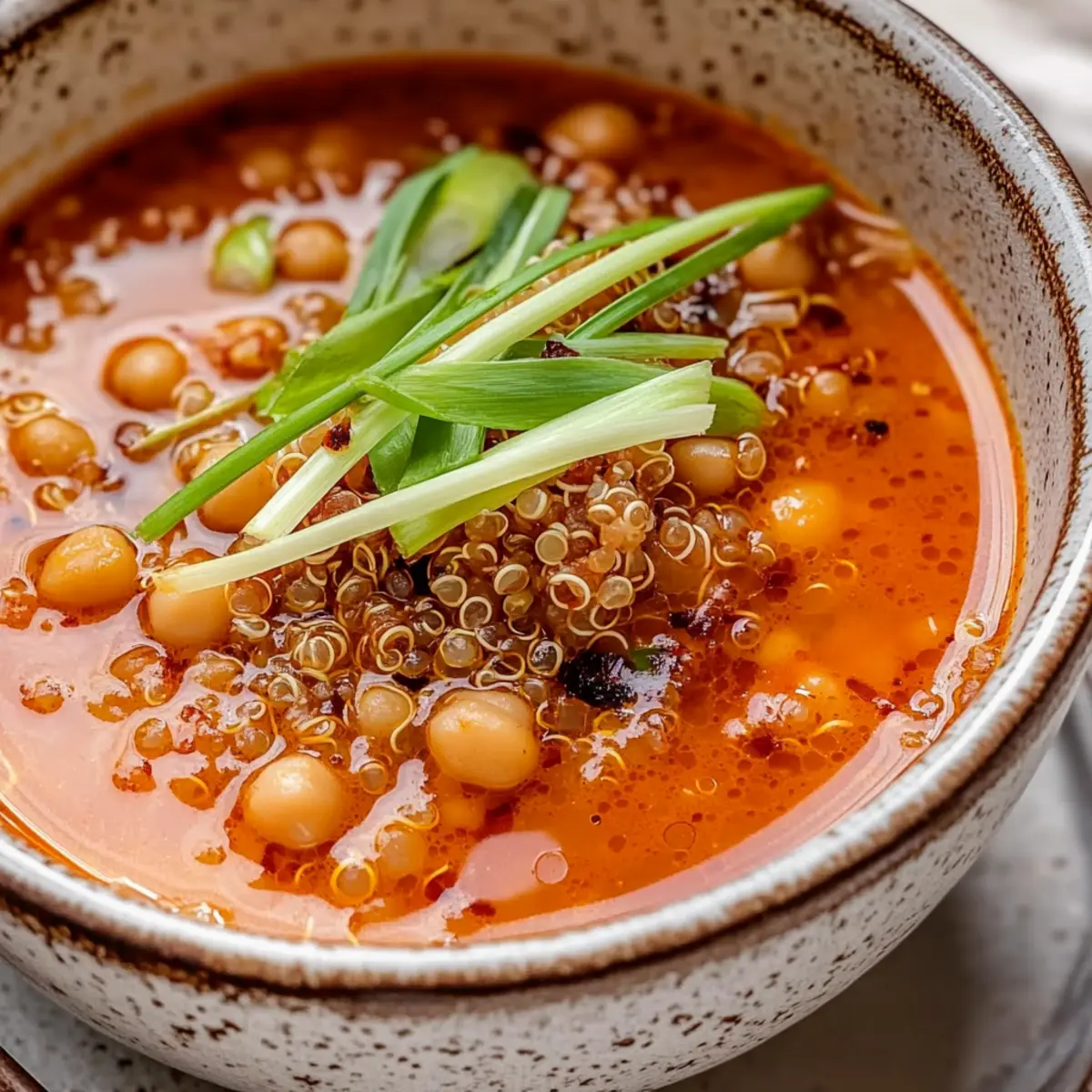
Why is Gochujang Chickpea Soup a Must-Try?
Comforting warmth: This soup wraps you in a cozy blanket of flavors, making it an ideal dish for chilly evenings.
Decadent taste: The unique blend of gochujang and umami-rich miso garners rave reviews for its delightful depth!
Quick to make: In just 35 minutes, you can whip up a delicious, hearty meal without the fuss!
Protein powerhouse: Chickpeas and quinoa provide ample nutrition, ensuring you feel full and satisfied long after your meal.
Versatile options: Feel free to customize with your favorite veggies or grains! And if you love soups, try pairing it with Vegetable Soup Wholesome for added variety.
Gochujang Chickpea Soup Ingredients
For the Soup Base
• Gochujang – a fermented Korean red pepper paste that offers a savory, spicy kick; ensures to choose gluten-free if needed.
• Avocado Oil – perfect for sautéing veggies; substitute with olive oil or sesame oil if preferred.
• Onions – adds a sweet, aromatic foundation; shallots can be an excellent milder alternative.
• Carrots – provides sweetness and texture; using frozen chopped carrots can save you prep time.
• Celery – deepens the flavor; feel free to omit if you don’t have it on hand.
• Jalapeño – adds heat; keep it whole for more spice or deseed it for a milder taste.
• Garlic – enhances overall flavor; fresh is best, but garlic powder can work in a pinch.
• Ginger – introduces freshness and warmth; fresh ginger is ideal, while ground can be a substitute.
For Protein and Grains
• Chickpeas – a great source of protein and fiber; canned is convenient but dried works if pre-soaked.
• Quinoa – boosts protein content; can swap with brown rice or other grains for variety.
For the Broth and Flavor
• Vegetable Broth – the comforting base; opt for low-sodium for a healthier choice.
• Miso Paste – adds umami depth; an optional ingredient, but recommended for enhanced flavor.
• Sesame Oil – provides richness; you can skip it if unavailable but can elevate the taste.
For Garnishing
• Scallions – add a fresh, vibrant finish; chives can be a delightful substitute or simply omit if desired.
Step‑by‑Step Instructions for Gochujang Chickpea Soup
Step 1: Heat the Oil
Begin by warming 2 tablespoons of avocado oil in a large pot over medium heat. Allow the oil to shimmer slightly, which indicates it’s ready for cooking. This step sets the stage for building rich flavors in your Gochujang Chickpea Soup, so don’t rush!
Step 2: Sauté the Vegetables
Add chopped onions, diced carrots, and sliced celery into the heated pot. Sauté these for about 5 minutes until the onions become translucent and fragrant. This aromatic base will create a delightful depth in your soup, inviting your senses to the upcoming flavors.
Step 3: Add Spices
Introduce minced garlic and grated ginger to the mixture, stirring well. Sauté for another 1-2 minutes until the garlic is golden and fragrant, signaling that it’s time to elevate the flavors even more. Be careful not to let them burn, as this could bitter your Gochujang Chickpea Soup.
Step 4: Incorporate Gochujang
Stir in 2 tablespoons of gochujang and sauté for an additional minute. This step ensures that the spicy and savory essence of the gochujang develops beautifully, allowing its rich colors to infuse your vegetables and provide a vibrant base for the soup.
Step 5: Add the Chickpeas and Quinoa
Now, toss in 1 can of drained chickpeas, rinsed quinoa, thyme, and 4 cups of vegetable broth. Stir everything to combine and bring your soup base to a rolling boil. This moment marks the beginning of a comforting, protein-packed Gochujang Chickpea Soup!
Step 6: Simmer
Once boiling, reduce the heat to low and partially cover the pot. Let it simmer for 15 minutes, allowing the quinoa to cook through and the flavors to melt together harmoniously. You’ll know it’s ready when the quinoa appears fluffy and the soup thickens slightly.
Step 7: Prepare the Miso Mixture
While the soup simmers, take a small bowl and whisk together 2 tablespoons of miso paste with a little warm water until it achieves a smooth consistency. This step will add a depth of umami flavor to your Gochujang Chickpea Soup, enhancing its savory profile.
Step 8: Combine Final Ingredients
Remove the soup from heat, then stir in the prepared miso mixture and 1 teaspoon of sesame oil. This fusion elevates your soup to a scrumptious level as the flavors blend beautifully. Ensure the soup is well mixed, giving every spoonful a burst of deliciousness.
Step 9: Season and Serve
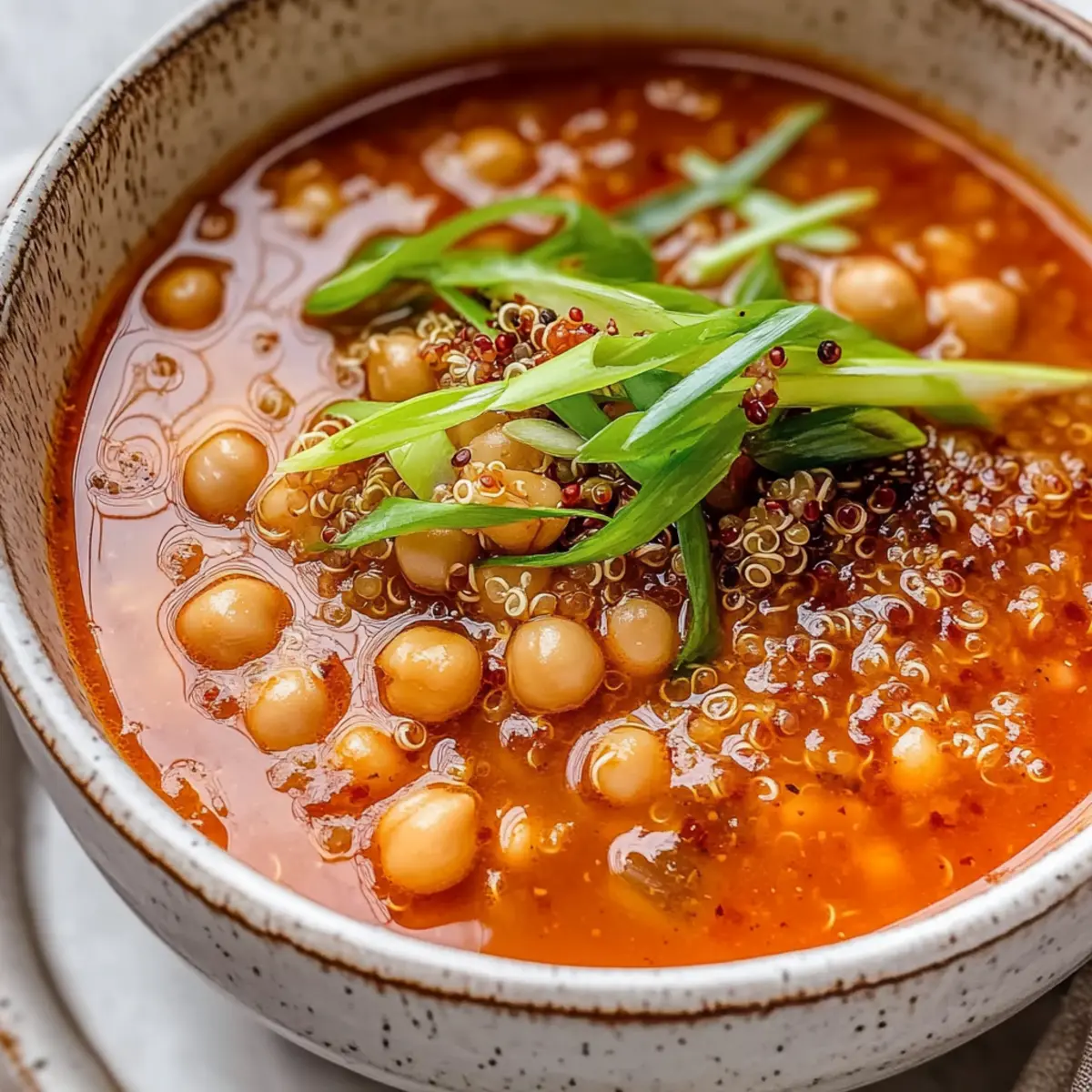
Finally, taste your Gochujang Chickpea Soup and adjust the seasoning with salt to your liking. Ladle the steaming soup into bowls and garnish with chopped scallions for a refreshing crunch. Your cozy meal is now ready to be enjoyed, perfect for sharing with loved ones!
Make Ahead Options
This Gochujang Chickpea Soup is perfect for making ahead to streamline your busy weeknights! You can prep the vegetables and even the quinoa up to 24 hours in advance. Simply chop the onions, carrots, and celery, then store them in an airtight container in the refrigerator. For the quinoa, you can cook it ahead as well. When you’re ready to enjoy your soup, just sauté the prepped veggies for 5 minutes, then stir in the gochujang, chickpeas, broth, and quinoa, letting it simmer until heated through. This approach maintains the soup’s delightful flavors while saving you precious time and effort, making it just as delicious as when freshly made!
What to Serve with Gochujang Chickpea Soup
Elevate your cozy dining experience with delicious accompaniments that will perfectly complement this rich, comforting soup.
-
Crusty Bread: A warm, crusty loaf is a classic pairing, perfect for soaking up every last drop of your hearty soup.
-
Steamed Rice: Light, fluffy rice provides a neutral base that balances the bold flavors of the soup beautifully, making each bite harmonious.
-
Fresh Salad: A vibrant mixed greens salad adds a refreshing crunch, enhancing the meal with crisp textures and bright flavors.
-
Roasted Vegetables: Seasoned veggies like broccoli or bell peppers bring a satisfying side that complements the soup’s warmth while offering additional nutrients.
-
Kimchi: For an adventurous twist, pair it with this traditional Korean side dish. Its tangy, spicy kick beautifully enhances the flavors of the gochujang base.
-
Chilled White Wine: A crisp Sauvignon Blanc or Pinot Grigio serves as a refreshing contrast, balancing the soup’s heat while elevating the dining experience.
Expert Tips for Gochujang Chickpea Soup
• Flavor Building: Sautéing veggies: Don’t rush the sautéing step—it’s crucial for developing a rich, flavorful base in your Gochujang Chickpea Soup.
• Spice Adjustment: Taste test: Adjust the amount of gochujang and jalapeño to suit your spice preference. Start small, then gradually add more for a personalized kick.
• Nutrient Boost: Greens addition: Consider adding leafy greens like spinach or kale towards the end of cooking for added nutrition without compromising flavor.
• Proper Storage: Leftovers care: Store your Gochujang Chickpea Soup in airtight containers. It will stay fresh in the fridge for up to 5 days or can be frozen for 3 months.
• Texture Enhancement: Check grain doneness: Ensure quinoa is fluffy before serving. If using other grains, follow package instructions for perfect cooking time.
Gochujang Chickpea Soup Variations & Substitutions
Feel free to add your own twist to this Gochujang Chickpea Soup for a personalized touch that excites your taste buds!
- Extra Veggies: Add zucchini, spinach, or kale to boost fiber and nutrients. The more colorful your soup, the more delightful it becomes!
- Grain Swap: Substitute quinoa with farro or bulgur for varying textures and tastes. Each grain brings a unique character, making the soup something new.
- Protein Boost: Stir in silken tofu or top with crispy tofu for a delightful protein punch. The added texture will elevate the dish beautifully!
- Flavor Twist: Experiment with different oils like sesame or coconut for a unique flavor dimension. Oils can add warmth and richness, creating a comforting vibe.
- Spice It Up: For additional heat, toss in some chili flakes or fresh serranos. Just a touch can take this soup to a whole new level of deliciousness!
- Sweet Fusion: Consider adding a splash of coconut milk for creaminess and a hint of sweetness. The creamy texture balances well with the spice of gochujang.
- Lemon Zest: A squeeze of fresh lemon juice before serving brightens up the flavors wonderfully. It adds a refreshing touch to your comforting soup!
Remember to enjoy this hearty warmth on its own or served up next to a bowl of Vegetable Soup Wholesome or alongside my comforting Mushroom Chicken Soup for a complete meal experience!
Storage Tips for Gochujang Chickpea Soup
Fridge: Store your Gochujang Chickpea Soup in an airtight container for up to 5 days. Let it cool completely before refrigerating to maintain freshness.
Freezer: If you want to keep it longer, freeze the soup in portions for up to 3 months. Label each container with the date for easy tracking.
Reheating: When you’re ready to enjoy the leftovers, reheat gently on the stove over medium heat, stirring occasionally until warmed through. You can also microwave in short intervals, stirring to avoid hot spots.
Addition Tips: If the soup thickens too much after refrigeration, simply add a splash of vegetable broth or water while reheating for the perfect consistency.
Gochujang Chickpea Soup Recipe FAQs
How do I choose the best gochujang for my soup?
When selecting gochujang, look for a brand that uses high-quality, natural ingredients. Check the label for gluten-free options if you’re avoiding gluten. Taste varies by brand, so consider trying a couple to find one that suits your palate best!
What is the best way to store leftover Gochujang Chickpea Soup?
To store your soup, let it cool completely before placing it in an airtight container. In the fridge, it will stay fresh for up to 5 days. For longer storage, freeze it in portions for up to 3 months. Just remember to label your containers with the date for easy tracking!
Can I freeze Gochujang Chickpea Soup, and how?
Absolutely! To freeze, ladle the cooled soup into freezer-safe containers, leaving some space at the top for expansion. Seal the containers tightly and label them with the date. When you’re ready to enjoy, thaw it overnight in the fridge before reheating. This way, you’ll savor the flavors as if it were freshly made!
What should I do if my soup is too thick after refrigeration?
If you find your Gochujang Chickpea Soup thickens in the fridge, don’t worry! Simply add a splash of vegetable broth or water while reheating on the stove. Stir it gently until it reaches your desired consistency, and enjoy!
Is Gochujang safe for those with certain dietary restrictions?
Gochujang typically contains fermented soybeans, so if you’re allergic to soy, it’s best to avoid it. It’s also gluten-free if you select the right brand. Always check the ingredient list to ensure it meets your dietary needs and feel free to substitute with other flavorful pastes if necessary.
How do I ensure the chickpeas in my soup are cooked perfectly?
For canned chickpeas, simply drain and rinse them well before adding to the soup, as they should be tender. If you’re using dried chickpeas, make sure to soak them overnight and cook them until tender before adding them to the soup. This will ensure a delightful texture and avoid any crunchiness in your Gochujang Chickpea Soup!
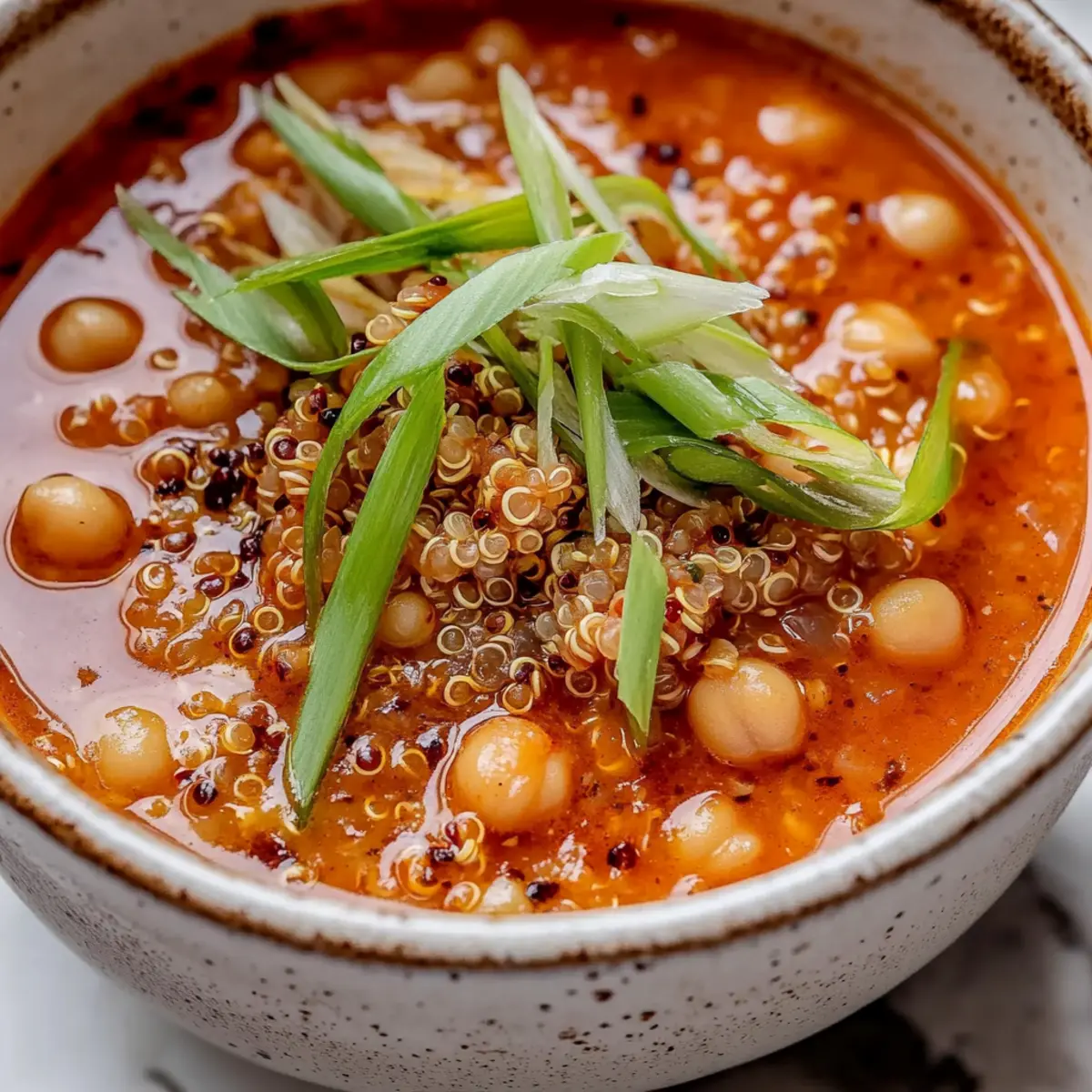
Delicious Gochujang Chickpea Soup for Cozy Nights
Ingredients
Equipment
Method
- Heat the avocado oil in a large pot over medium heat.
- Sauté chopped onions, diced carrots, and sliced celery for 5 minutes until onions are translucent.
- Add minced garlic and grated ginger, sauté for another 1-2 minutes until fragrant.
- Stir in gochujang and sauté for an additional minute.
- Add chickpeas, quinoa, thyme, and vegetable broth; bring to a rolling boil.
- Reduce heat to low and partially cover; let it simmer for 15 minutes.
- Whisk miso paste with a little warm water in a small bowl until smooth.
- Stir in the miso mixture and sesame oil into the soup off the heat.
- Taste and adjust seasoning with salt; serve garnished with chopped scallions.
Leave a Reply