
Every time I cook salmon, I’m reminded of the pristine waters from which this incredible fish comes. Today, I’m thrilled to share my easy gluten-free Salmon Cakes with Lemon Dill Yogurt Sauce—a dish that perfectly balances convenience and flavor. In just 30 minutes, you can create crispy, mouthwatering patties that are healthy and wonderfully satisfying, making them a fantastic choice for a weeknight dinner or meal prep. Not only are they gluten-free, but they also pack a punch of protein and omega-3 fatty acids, ensuring a nutritious meal without sacrificing taste. With their versatility, these salmon cakes shine both warm and cold, inviting you to enjoy them at your leisure. Are you ready to elevate your seafood game? Let’s dive in!
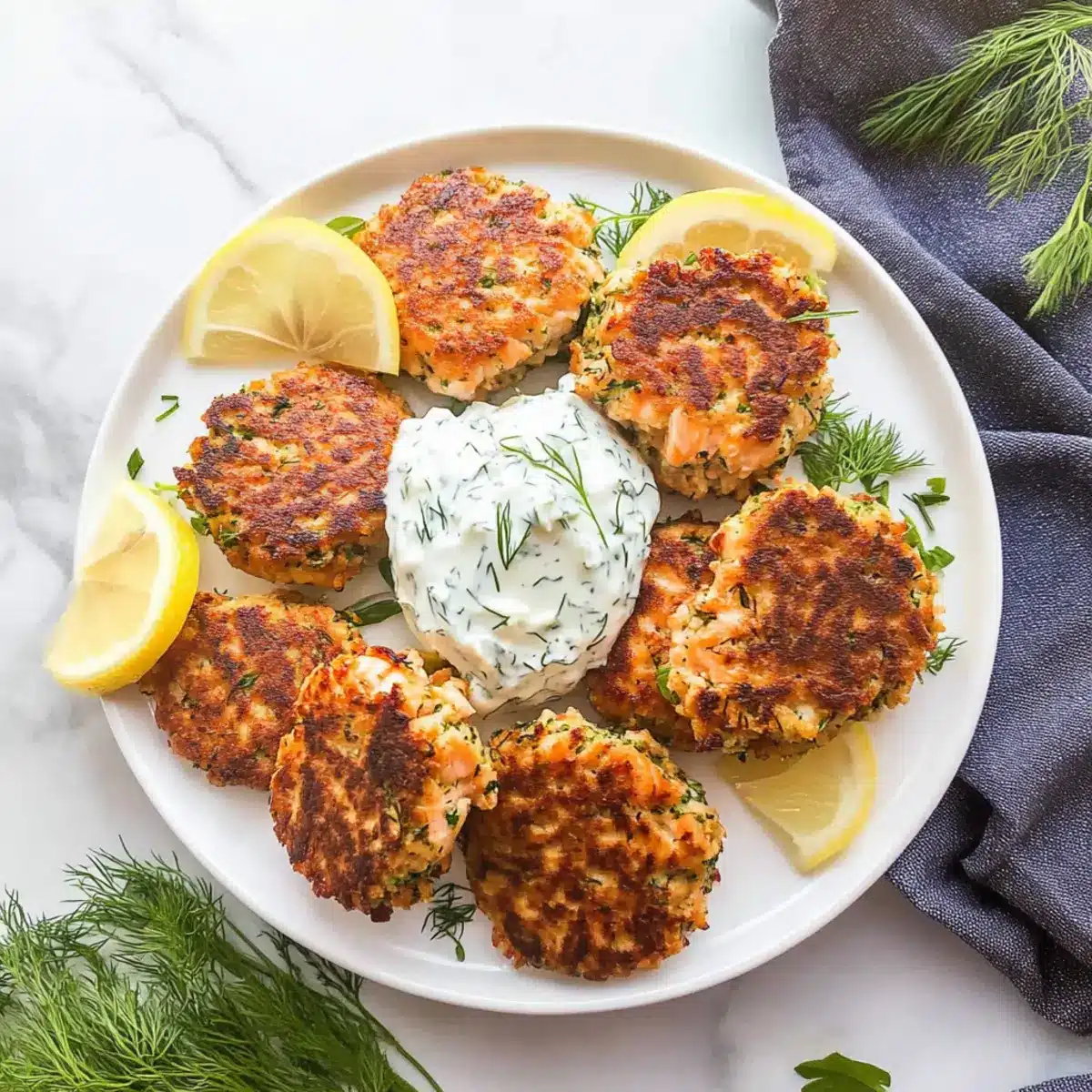
Why Are These Salmon Cakes Unique?
Freshness, made with wild salmon, enriches every bite. Quick Prep, perfect for busy weeknights, you can whip them up in just 30 minutes. Healthy Choice, packed with protein and omega-3 fatty acids, they are a guilt-free indulgence. Versatile Serving, enjoy them warm for dinner or cold in a lunchbox. For an extra treat, try them with a side of Mini German Pancakes or toss some Feta Skewers Cucumber together for a refreshing contrast!
Salmon Cakes with Lemon Dill Yogurt Sauce
• Creamy, zesty sauce enhances the potato’s flavor.
For the Salmon Cakes
- Fresh Wild Salmon – The star ingredient, it offers both moisture and rich flavor; canned salmon is a suitable substitute.
- Egg – Binds everything together, keeping the cakes from falling apart; you can opt for chia or flax eggs for a vegan alternative.
- Gluten-Free Breadcrumbs – Adds structure and a delightful texture; crushed rice cakes work as an excellent gluten-free option.
- Dijon Mustard – Introduces a wonderful tang; yellow mustard can be used for a milder taste.
- Diced Onion – Infuses moisture and flavor into your cakes; green onions serve as a lovely substitute if preferred.
- Lemon Juice – Brightens and balances flavors; lime juice provides a unique twist if you need an alternative.
- Fresh Dill – A fragrant herb that beautifully complements the salmon; feel free to use other fresh herbs like parsley or chives.
For the Lemon Dill Yogurt Sauce
- Greek Yogurt – Provides a creamy base for the sauce; regular or dairy-free yogurt can easily replace it.
- Lemon Zest – Intensifies the lemony flavor, making it fresh and vibrant; substitutes like lime zest can switch up the flavor profile.
- Dill (for sauce) – Reinforces the herby flavor to match the salmon cakes; other fresh herbs can work just as well if you’re feeling adventurous.
These salmon cakes with lemon dill yogurt sauce not only highlight the fresh flavors of the sea but also make for a healthy, quick dinner option you can feel good about serving your family!
Step‑by‑Step Instructions for Salmon Cakes with Lemon Dill Yogurt Sauce
Step 1: Prep the Salmon
Begin by cooking your salmon if you’re using fresh wild salmon. Bake or pan-sear it at 375°F (190°C) for about 12-15 minutes, until the fish flakes easily with a fork. Allow it to cool slightly before flaking it into a large bowl, ensuring there are no bones left, and it’s ready to mix with the other ingredients.
Step 2: Mix Ingredients
In the bowl with the flaked salmon, add one egg, gluten-free breadcrumbs, Dijon mustard, diced onion, lemon juice, and freshly chopped dill. Use a fork to gently combine these ingredients until just mixed, making sure not to overwork the mixture—this ensures your salmon cakes will remain tender.
Step 3: Form Patties
With your mixture combined, wet your hands slightly to prevent sticking, and scoop out portions of the mixture to shape them into patties about 2-3 inches wide. Aim for uniformity in size to ensure even cooking. Place the formed patties on a plate and refrigerate for about 10 minutes to help them set.
Step 4: Cook Patties
Heat a non-stick skillet over medium heat and add a tablespoon of oil to coat the bottom. Once the oil is hot (you can test by sprinkling a drop of water), gently place the patties into the skillet. Cook for 4-5 minutes on each side, until they turn golden brown and crispy. Flip carefully using a spatula to avoid breaking them.
Step 5: Prepare the Sauce
While the salmon cakes are cooking, prepare the lemon dill yogurt sauce. In a separate bowl, combine Greek yogurt, lemon zest, lemon juice, and a pinch more dill. Whisk together until the mixture is smooth and creamy, adjusting the seasoning if needed. This sauce adds a refreshing tang to your salmon cakes.
Step 6: Serve
Once the salmon cakes are beautifully golden brown and cooked through, remove them from the skillet and place them on a serving plate. Drizzle with the zesty lemon dill yogurt sauce generously over the top. Enjoy them warm alongside a light salad or roasted vegetables for a wholesome meal.
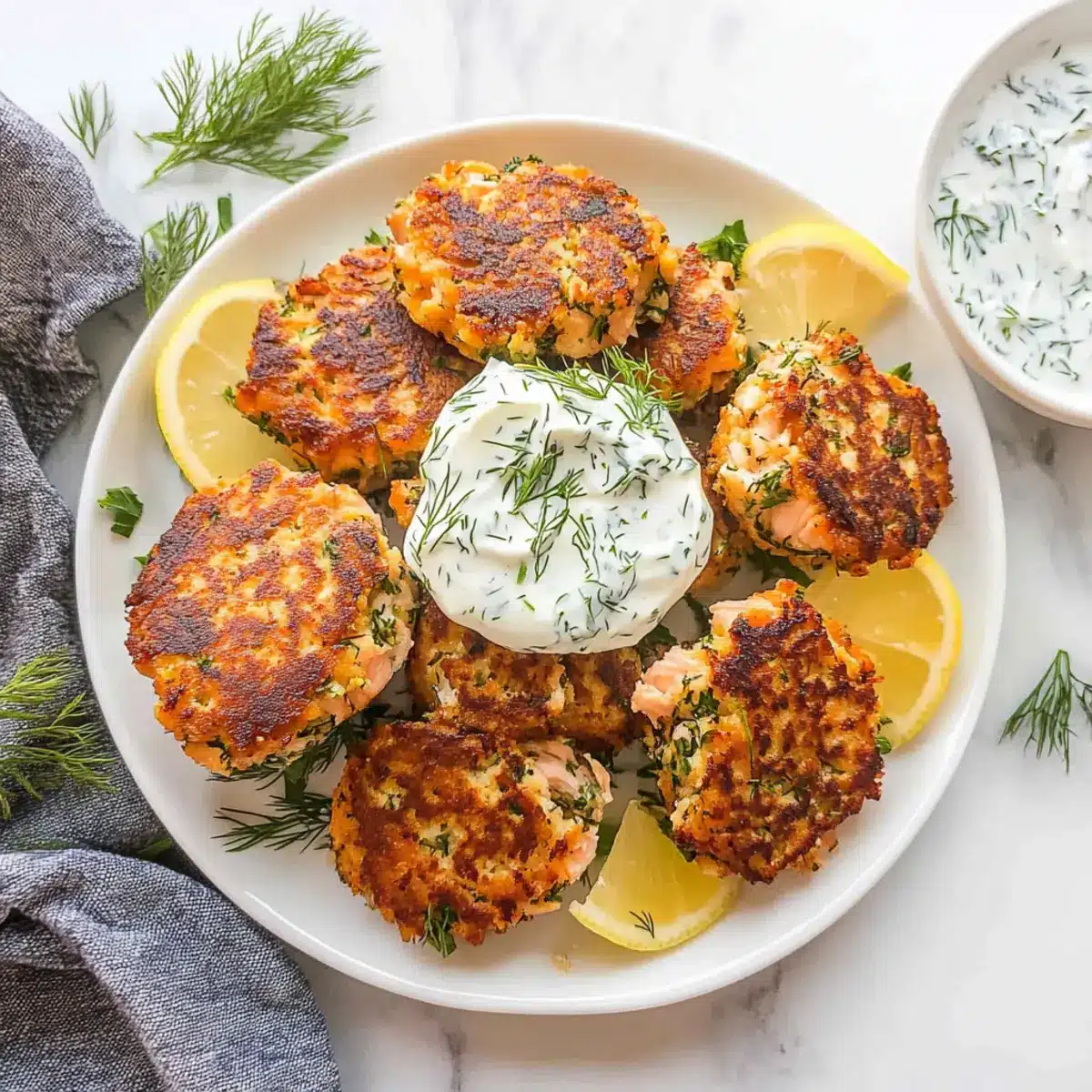
Variations & Substitutions for Salmon Cakes
Feel free to get creative and customize these salmon cakes to suit your taste and dietary needs!
-
Spice it Up: Add a pinch of cayenne or red pepper flakes for a delicious kick. Spice can elevate those flavors and make it much more adventurous!
-
Change the Proteins: Swap salmon for tuna, or even canned crab for a delightful variation. Each option brings its own unique twist to the dish, so play around and find your favorite!
-
Make it Vegan: Use canned chickpeas as a base instead of salmon and substitute Greek yogurt with a creamy tahini or cashew-based sauce. This transforms the dish while keeping it delicious, perfect for plant-based lovers.
-
Add Veggies: Incorporate chopped bell peppers or grated zucchini for extra moisture and nutrients. These additions not only enhance flavor but also add a lovely texture!
-
Herb Infusion: Experiment with different herbs like basil or cilantro in place of dill. Each herb introduces a new dimension to your salmon cakes, inviting fresh flavors.
-
Citrus Twist: Replace lemon with lime or orange juice for a fruity uplift. Citrus variations can brighten the flavor and add a unique flair to your dish!
-
Texture Change: Substitute gluten-free breadcrumbs for crushed cornflakes or panko for an exceptional crunch. These textural changes can make all the difference in how delightful your cakes feel!
-
Sauce Variations: Mix in a dash of sriracha or horseradish into the yogurt sauce for added zing. The sauce is where you can get super creative and tailor the heat to your preference!
For more delightful ideas to pair with these salmon cakes, try them alongside a light salad or perhaps some Mini German Pancakes for a fun texture contrast.
Expert Tips for Salmon Cakes
-
Uniform Size: Ensure your salmon cakes are similar in size for even cooking; this helps every patty achieve that perfect crispiness.
-
Chill Before Cooking: Refrigerate formed patties for about 10 minutes before cooking; this helps them hold their shape while frying.
-
Test the Oil: For the best results, make sure the oil is hot before adding the patties; a splash of water should sizzle when it hits the pan.
-
Avoid Overmixing: Mix your ingredients just until combined; overworking will make the salmon cakes tough rather than tender and flaky.
-
Storage Success: Store leftover salmon cakes in an airtight container; they keep well in the fridge for up to 3 days and can be reheated gently in the oven.
What to Serve with Easy Gluten-Free Salmon Cakes with Lemon Dill Yogurt Sauce
Enhance the experience of your salmon cakes by pairing them with delightful sides that bring harmony and balance to your meal.
-
Crispy Roasted Asparagus: The crunch and slight bitterness of roasted asparagus elegantly contrast the richness of the salmon cakes. A drizzle of olive oil and a sprinkle of salt brings out its vibrant flavor.
-
Light Arugula Salad: A peppery arugula salad with cherry tomatoes and a lemon vinaigrette adds freshness that beautifully complements the lemon dill yogurt sauce.
-
Creamy Mashed Potatoes: Smooth, buttery mashed potatoes provide a classic creaminess that pairs well with the textured salmon cakes. Enrich them with sour cream for an extra layer of flavor.
-
Zesty Quinoa Salad: A zesty mix of quinoa, bell peppers, and fresh herbs elevates your plate with bright flavors and a nutritious boost; it’s a colorful companion to your fish.
-
Garlic Green Beans: Sautéed green beans tossed with garlic offer a crunchy, savory addition, bringing a pop of color and freshness to your meal.
-
Chilled Cucumber Salad: Crisp cucumber slices dressed in a yogurt-based dill sauce can counterbalance the warm, hearty flavors of the salmon cakes, adding a refreshing, cool element.
-
Herbed Couscous: Light and fluffy herbed couscous seasoned with lemon zest is a satisfying and fragrant side that pairs perfectly with the richness of the salmon.
-
Chardonnay or Sauvignon Blanc: A chilled glass of Chardonnay or Sauvignon Blanc elevates the entire dining experience. Their crisp notes enhance the fresh flavors of the salmon cakes while complementing the lemon dill yogurt sauce.
Make Ahead Options
These Easy Gluten-Free Salmon Cakes with Lemon Dill Yogurt Sauce are perfect for meal prep enthusiasts! You can make the salmon mixture up to 24 hours in advance; just combine flaked salmon, egg, breadcrumbs, Dijon mustard, diced onion, lemon juice, and fresh dill in a bowl, cover, and refrigerate it. Additionally, you can form the patties and refrigerate them for up to 3 days before cooking to maintain their freshness. When you’re ready to cook, simply sauté the patties for 4-5 minutes on each side until golden brown. This prep allows you to enjoy a delightful seafood meal with minimal fuss on busy weeknights, keeping them just as delicious and flavorful!
How to Store and Freeze Salmon Cakes with Lemon Dill Yogurt Sauce
Fridge: Store cooled salmon cakes in an airtight container for up to 3 days. They can be enjoyed warm or cold, making them a great option for meal prep.
Freezer: For longer storage, freeze the cooked salmon cakes. Place them in a single layer on a baking sheet until firm, then transfer to an airtight container or freezer bag for up to 2 months.
Reheating: When ready to enjoy, reheat the salmon cakes in the oven at 350°F (175°C) for about 10-15 minutes or until heated through. This will help maintain their crispiness.
Batch Cooking: Consider making a double batch of these salmon cakes with lemon dill yogurt sauce for quick meals throughout the week—perfect for busy nights!
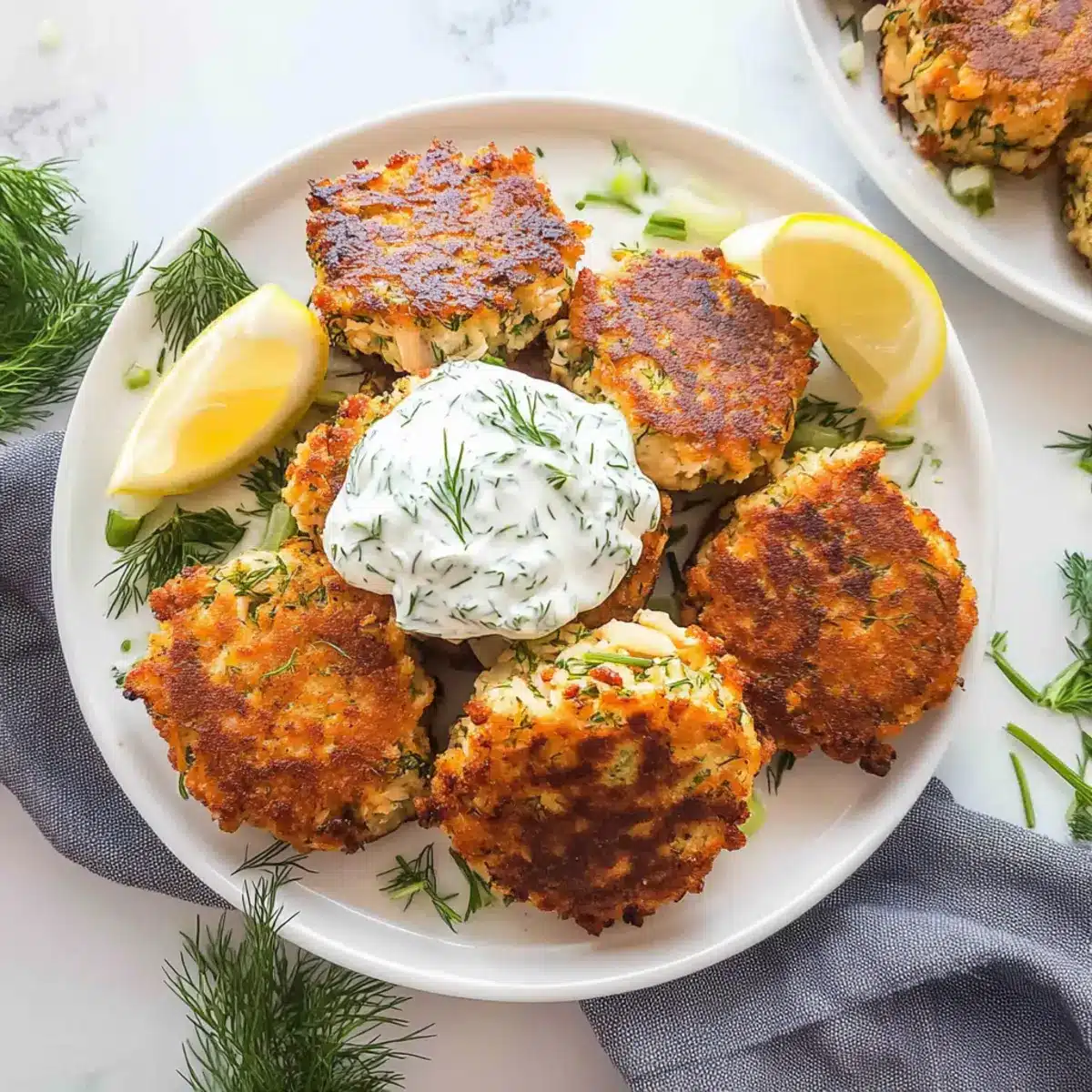
Salmon Cakes with Lemon Dill Yogurt Sauce Recipe FAQs
How do I choose the best salmon for my cakes?
Absolutely! Opt for fresh wild salmon whenever possible, as it enriches the flavor and moisture of your cakes. Look for salmon that is firm and has a bright color; avoid fish that appears dull or has dark spots, as this can indicate age. If fresh salmon is unavailable, high-quality canned salmon is an excellent alternative—just make sure to drain it well before using.
What’s the best way to store leftover salmon cakes?
Very! Once your salmon cakes have cooled, store them in an airtight container in the fridge for up to 3 days. They can be enjoyed warm or cold, making them perfect for meal prep or lunchtime snacks. Just make sure they’re completely cooled before sealing to avoid moisture buildup.
Can I freeze salmon cakes for later use?
Of course! To freeze, place the cooked salmon cakes in a single layer on a baking sheet and freeze until firm (about 1-2 hours). Then transfer them into an airtight container or freezer bag, ensuring to label with the date. They can be frozen for up to 3 months. When you’re ready to eat them, reheat in the oven at 350°F (175°C) for about 10-15 minutes until warmed through and crispy.
What should I do if the salmon cakes are falling apart while cooking?
No worries! If your salmon cakes are falling apart, it could be due to insufficient binding. Make sure to include the right amount of egg to help hold your mixture together. If they still don’t hold up, try chilling them a little longer before cooking—this helps the patties firm up. Cooking them on a moderately hot skillet will also create a nice crust, helping them stay intact.
Are salmon cakes safe for people with allergies?
It’s very important to be cautious! This recipe contains fish and may include allergens if you’re using specific types of breadcrumbs or yogurt. Always read labels carefully for gluten-free options, and be cautious if you’re serving guests with seafood allergies. You can also substitute the salmon with canned chickpeas for a delicious vegan alternative, and use dairy-free yogurt if needed.
How can I customize the flavors of my salmon cakes?
The more the merrier! Feel free to enhance your salmon cakes by adding spices like cayenne for heat or different herbs such as parsley or chives for a unique twist. If you’re feeling adventurous, mix in some grated zucchini or finely chopped bell peppers for extra texture and flavor. Remember, the base of this recipe is adaptable; just keep the wet-to-dry ratios in mind to maintain proper consistency!
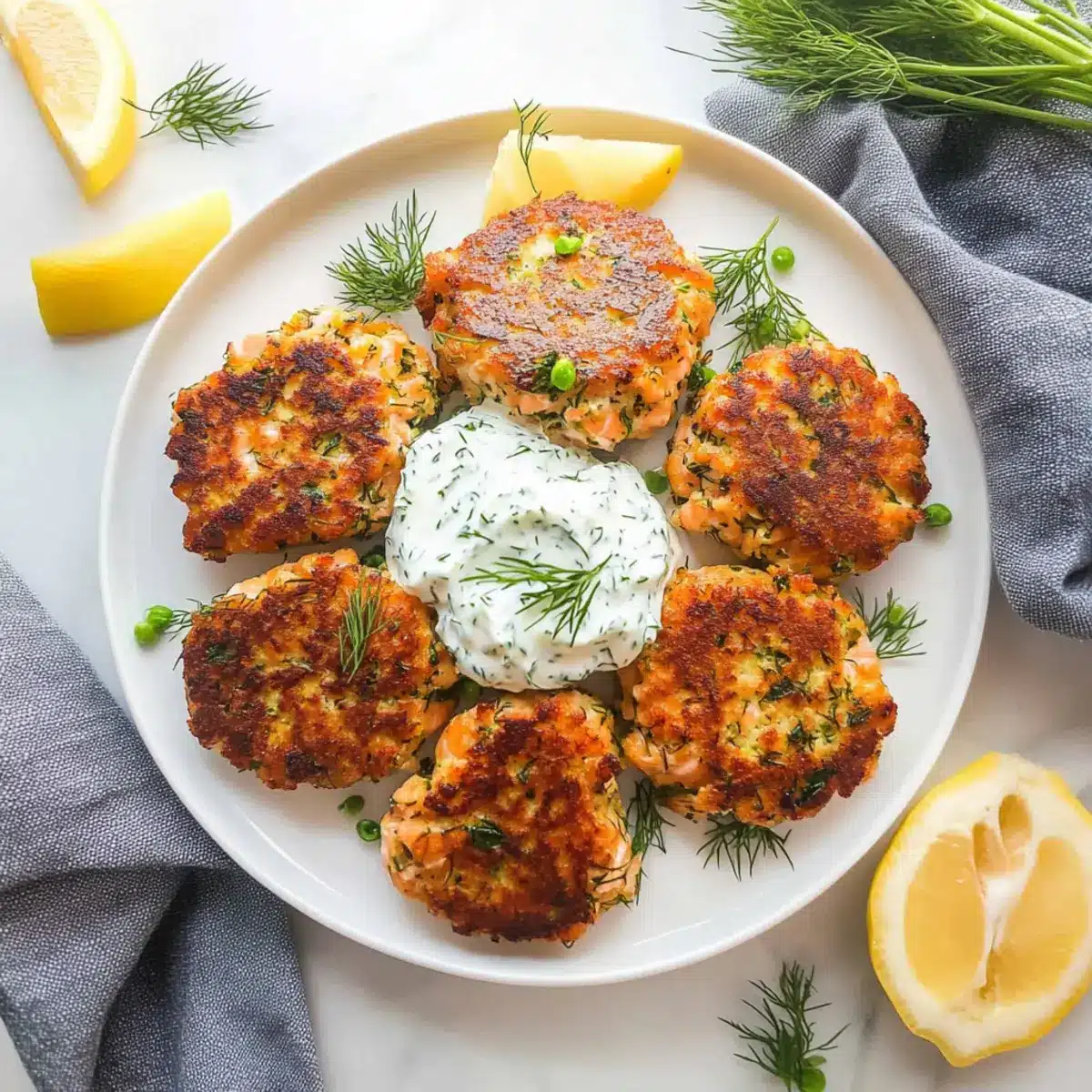
Crispy Salmon Cakes with Lemon Dill Yogurt Sauce Delight
Ingredients
Equipment
Method
- Begin by cooking your salmon if you're using fresh wild salmon. Bake or pan-sear it at 375°F (190°C) for about 12-15 minutes until the fish flakes easily with a fork. Allow it to cool slightly before flaking it into a large bowl.
- In the bowl with the flaked salmon, add one egg, gluten-free breadcrumbs, Dijon mustard, diced onion, lemon juice, and freshly chopped dill. Use a fork to gently combine these ingredients until just mixed, making sure not to overwork the mixture.
- Wet your hands slightly to prevent sticking, and scoop out portions of the mixture to shape them into patties about 2-3 inches wide. Place the formed patties on a plate and refrigerate for about 10 minutes.
- Heat a non-stick skillet over medium heat and add a tablespoon of oil. Once the oil is hot, gently place the patties into the skillet. Cook for 4-5 minutes on each side until golden brown and crispy.
- While the salmon cakes are cooking, prepare the lemon dill yogurt sauce. Combine Greek yogurt, lemon zest, lemon juice, and a pinch more dill in a bowl. Whisk together until smooth and creamy.
- Once the salmon cakes are cooked through, remove them from the skillet and place them on a serving plate. Drizzle with the lemon dill yogurt sauce and enjoy warm or cold.
Leave a Reply