
As the autumn chill begins to wrap around us, I find myself craving something warm and nourishing. Enter Vegan Korean Radish Soup, or Mu Guk, a delightful dish that blends comfort with vibrant flavors—think silky daikon radish simmered to perfection in a savory broth. This recipe is a game-changer for anyone on a vegan diet, offering a satisfying alternative to traditional beef soups without compromising on taste. In just 30 minutes, you can whip up a hearty, gluten-free meal that not only pleases the palate but also warms the soul. Curious to discover how this simple yet flavorful broth can become a staple in your kitchen? Let’s dive in!

Why Choose Vegan Korean Radish Soup?
Comforting Warmth: Each bowl delivers a soothing embrace, perfect for chilly days or cozy nights.
Bursting with Flavor: The umami-rich broth, infused by daikon and shiitake mushrooms, tantalizes your taste buds with every sip.
Quick to Prepare: In just 30 minutes, you’ll have a satisfying meal ready—a lifesaver for busy weeknights!
Versatile & Customizable: Whether you want to add tofu or enjoy it chilled, this soup adapts to your unique preferences.
Healthy & Nourishing: Packed with vitamins from Korean radish, it’s a guilt-free delight! Pair it with Vegetable Soup Wholesome for a complete nutrition boost!
Crowd-Pleasing: Vegan or not, everyone will love this deliciously hearty dish, making it a star at your dinner table.
Korean Radish Soup Ingredients
For the Broth
• Korean Radish (Daikon) – This key ingredient provides sweetness and texture, so opt for a large variety for best results.
• Sesame Oil – It adds depth and richness to your soup, enhancing overall flavor.
• Water or Vegetable Broth – Creates the soup base; using vegetable broth boosts the umami taste.
• Kelp/Dashi Kombu – Infuses the broth with a deep umami flavor; can be substituted with vegetable broth if needed.
• Dried Shiitake Mushroom – Enhances flavor with its earthy notes; recommended for that extra umami kick.
For the Aromatics
• Green Onions – Offers freshness and a mild onion taste; slice diagonally for a beautiful presentation.
• Garlic – Minced for a burst of flavor; it’s packed with antioxidants to enhance health benefits.
For Seasoning
• Gluten-Free Soy Sauce or Coconut Aminos – Provides essential saltiness and umami; opt for coconut aminos for a soy-free option.
• Salt – Adjust the seasoning of your soup to taste.
• White Pepper – Optional for a touch of heat and extra flavor.
For Garnish (Optional)
• Vegan “Beef” Alternative – Adds plant-based protein; sauté with the radish for a heartier dish.
• Sesame Seeds and Fresh Green Onions – Garnish for added visual appeal and flavor enhancement.
This Vegan Korean Radish Soup is a delightful choice for anyone seeking comfort in every sip without compromising on taste!
Step‑by‑Step Instructions for Korean Radish Soup
Step 1: Prepare Radish
Begin by peeling the large Korean radish, then slice it into triangle shapes for optimal texture. Aim for pieces about half an inch thick, as this ensures they cook evenly. Set aside the prepared radish, allowing its natural sweetness to shine in your Vegan Korean Radish Soup.
Step 2: Sauté
In a medium pot, heat 2 tablespoons of sesame oil over medium-high heat. Once the oil shimmers, add the sliced radish and sauté for 2-3 minutes, or until the radish becomes slightly translucent. This step builds the foundation of flavor, giving your soup a rich, savory base.
Step 3: Add Aromatics
Next, stir in the diagonally sliced green onions and continue to sauté for another 1-2 minutes, letting their aroma fill the kitchen. The bright green color will brighten your Vegan Korean Radish Soup, and the onions will soften, adding depth to the soup’s flavor profile.
Step 4: Simmer Broth
Pour in 4 cups of water or vegetable broth, along with a piece of kelp or dashi kombu and dried shiitake mushrooms. Bring the mixture to a boil over high heat, then reduce the heat and let it simmer gently for 12-15 minutes. The radish should become tender and infused with umami, creating a delightful broth.
Step 5: Season
After simmering, stir in gluten-free soy sauce and salt to taste. Allow the soup to simmer for an additional 3 minutes, enhancing the flavors of the Vegan Korean Radish Soup. Taste and adjust seasoning, ensuring a perfect balance of savory and delightful.
Step 6: Serve
Ladle the soup into bowls while it’s hot, garishing each with a sprinkle of sesame seeds and a few more green onions for a visually appealing touch. Enjoy your hearty Vegan Korean Radish Soup warm, alongside steamed rice or noodles for a complete meal experience.

Variations & Substitutions for Korean Radish Soup
Customize your Vegan Korean Radish Soup to satisfy your cravings and dietary needs! Each variation can introduce a delightful twist that tempts your taste buds.
-
Protein Boost: Add tofu for an extra protein source. Simply sauté cubed firm tofu alongside the radish for a satisfying texture and flavor.
-
Heartier Option: Try seitan instead of tofu. Its chewy texture mimics meat, providing a heartiness that makes this soup even more filling.
-
Spicy Delight: Incorporate chili flakes or fresh chopped chilies for a kick of heat. This adds excitement and makes your soup a fiery experience!
-
Chilled Soup: Serve it chilled on hot days. After cooking, allow the soup to cool, then refrigerate for an invigorating summer treat that surprises the palate.
-
Umami Explosion: For deeper flavor, add miso paste. Stir it in just before serving for a creamy, savory depth that’ll have you coming back for more.
-
Creamy Texture: Blend a portion of the soup for a creamy consistency, leaving the rest chunky. This variation offers a comforting creaminess while still showcasing the radish pieces.
-
Vegetable Medley: Toss in additional vegetables like carrots or spinach for added nutrition and vibrant color. The more, the merrier in this comforting dish!
-
Savory Garnish: Enhance garnishes with toasted nuts like almonds or walnuts for a delightful crunch. They add a nutty depth that harmonizes beautifully with the soup’s flavors.
For a wholesome boost, consider pairing this soup with a delicious Vegetable Soup Wholesome or the savory Mushroom Chicken Soup as side options! Dive into these variations and let your culinary creativity shine!
How to Store and Freeze Korean Radish Soup
Fridge: Store leftover Korean Radish Soup in an airtight container for up to 4 days. Make sure it’s fully cooled before sealing to maintain its delicious flavor.
Freezer: For longer storage, freeze the soup in airtight containers for up to three months. To avoid freezer burn, wrap containers tightly.
Thawing: Thaw frozen soup in the fridge overnight, or use a microwave on the defrost setting. When reheating, bring to a simmer on the stovetop for best results.
Reheating: Gently reheat on the stove, adding a splash of water or vegetable broth if the soup has thickened during storage; enjoy the fresh flavors again!
What to Serve with Vegan Korean Radish Soup
Imagine a cozy dinner table, filled with delectable, warming dishes that perfectly complement the savory richness of your Vegan Korean Radish Soup.
- Steamed Jasmine Rice: Light and fluffy, it soaks up the broth, adding a comforting and satisfying element to every spoonful.
- Crispy Vegetable Spring Rolls: Their crunch and fresh fillings make for a delightful contrast against the soup’s warmth and depth, offering refreshing bites in between sips.
- Spicy Kimchi: The tangy, fermented flavors bring a vibrant kick that balances the mellow soup, creating a delightful symphony of flavors on your palate.
- Stir-Fried Tofu: Perfectly golden and slightly crispy, tofu adds a protein boost and extra texture, enhancing the overall satisfaction of your meal.
- Sesame Cucumber Salad: Refreshing and crunchy, this salad adds brightness and a cool contrast to the warm soup, making your meal feel complete and balanced.
- Chilled Korean Noodles: The slight sweetness of the noodles paired with a spicy dressing provides another flavor level, creating a well-rounded dining experience.
- Mango Sticky Rice (Dessert): End your meal on a sweet note with creamy coconut rice and fresh mango! The dessert’s sweetness beautifully contrasts the savory notes of the soup.
- Herbal Tea: A soothing herbal tea, such as chamomile or ginger, pairs well by cleansing the palate and offering a comforting finish to this delightful meal.
Make Ahead Options
These Vegan Korean Radish Soup (Mu Guk) preparations are perfect for busy home cooks looking to save time! You can chop the Korean radish and green onions up to 24 hours in advance; store them in an airtight container in the refrigerator to maintain freshness and prevent browning. The broth can also be prepared up to 3 days ahead, just be sure to refrigerate it as well. When ready to enjoy, simply reheat the broth, add the sautéed radish and onions, and stir in the seasoning ingredients before serving. This way, you’ll have a comforting, flavorful meal on the table with minimal effort!
Expert Tips for Korean Radish Soup
• Ingredient Selection: Ensure you use a large Korean radish for optimal sweetness; smaller spicy varieties can clash with the broth’s flavor profile.
• Enhance Umami: For a richer broth, don’t skip on the dried shiitake mushrooms; they significantly boost the umami level in your Korean Radish Soup.
• Adjust Seasoning: Always taste your soup before serving and adjust the gluten-free soy sauce or coconut aminos to reach the desired level of saltiness.
• Avoid Soggy Radish: Cut the radish into uniform pieces (about ½ inch thick) to ensure even cooking; this prevents some pieces from becoming mushy.
• Storage Tips: When storing leftovers, let the soup cool before sealing in an airtight container to preserve the delightful flavors.
• Garnishing: Adding sesame seeds and fresh green onions at the end not only enhances flavor but also boosts visual appeal; don’t skip this final touch!

Korean Radish Soup Recipe FAQs
What kind of Korean radish should I use?
Absolutely! For this soup, I recommend using a large Korean or Asian radish, also known as daikon. These varieties are sweeter and have a wonderful texture that enhances the overall flavor of the soup, creating that comforting broth we all crave.
How should I store leftovers?
Very! Store your leftover Korean Radish Soup in an airtight container in the refrigerator for up to 4 days. It’s essential to let the soup cool completely before sealing to maintain its flavors and freshness. Just remember, it might taste even better the next day as the flavors meld together!
Can I freeze Korean Radish Soup?
Certainly! To freeze, ladle the soup into airtight containers, leaving some space at the top for expansion, and store it for up to three months. To avoid freezer burn, ensure the containers are tightly sealed. When you’re ready to enjoy it, simply thaw in the refrigerator overnight and reheat on the stovetop.
Why is my soup too salty?
No worries! If you find your soup too salty after adding soy sauce or coconut aminos, you can balance it out by adding more water or vegetable broth to dilute the saltiness. Add additional radish or vegetables to absorb some of the saltiness, too! Taste frequently as you adjust.
Is this soup suitable for my pet?
Absolutely, but with caution! While Korean Radish Soup is vegetarian and vegan-friendly, it’s best to avoid giving it to pets due to potentially harmful ingredients like garlic or too much salt. Always consult your veterinarian before introducing new foods to your pet’s diet.
Can I add other proteins to this vegan soup?
The more the merrier! If you’d like to boost the protein content, feel free to add sautéed tofu, seitan, or even a vegan beef alternative. Simply incorporate it during the sautéing step with the radish for an extra hearty bowl of Korean Radish Soup. Enjoy customizing it!
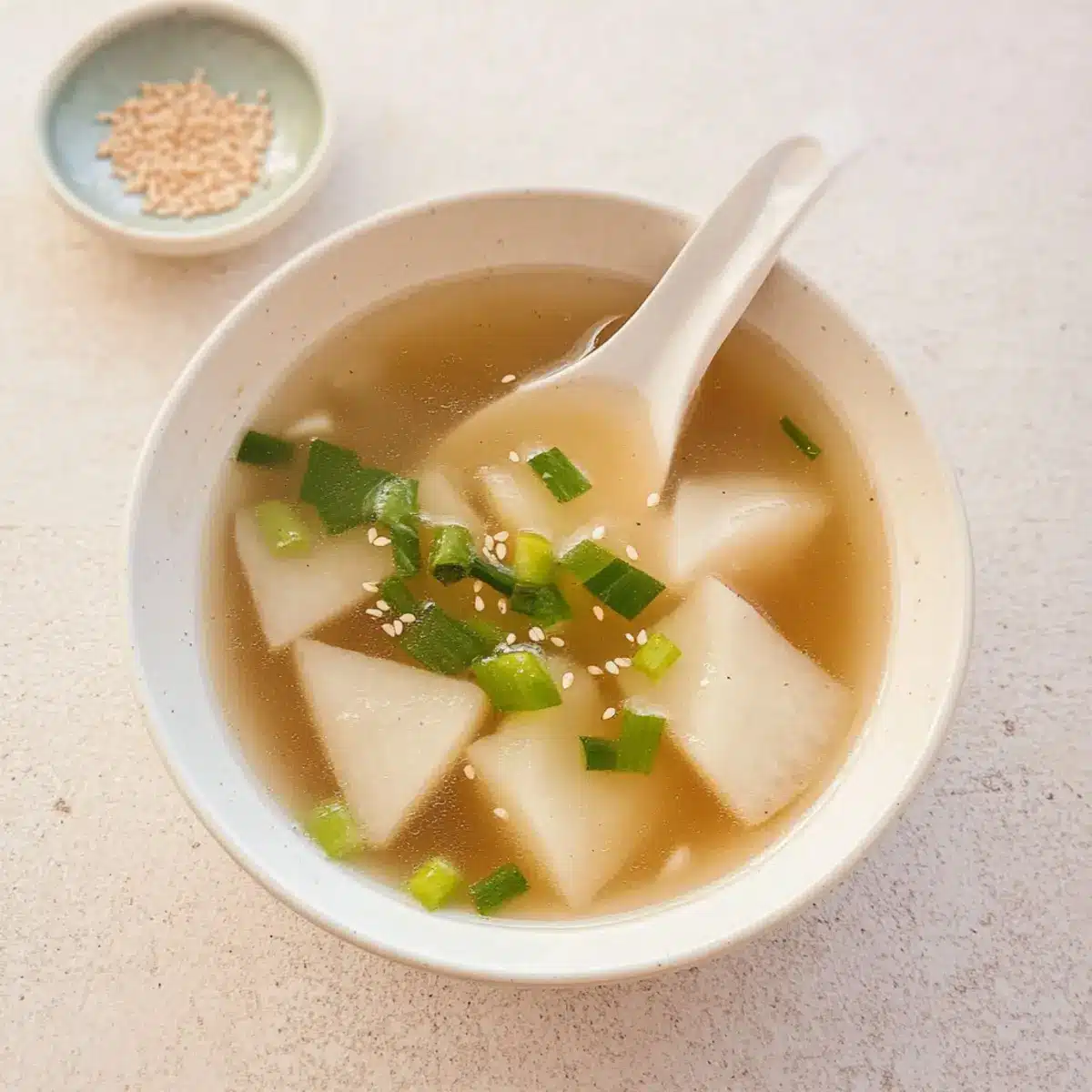
Hearty Vegan Korean Radish Soup: Comfort in Every Sip
Ingredients
Equipment
Method
- Prepare Radish: Peel the Korean radish and slice it into triangle shapes about half an inch thick.
- Sauté: Heat sesame oil in a medium pot. Add sliced radish and sauté for 2-3 minutes until translucent.
- Add Aromatics: Stir in sliced green onions and sauté for 1-2 minutes.
- Simmer Broth: Add water or vegetable broth, kelp or dashi kombu, and shiitake mushrooms. Bring to a boil, then simmer for 12-15 minutes.
- Season: Stir in soy sauce and salt to taste, then simmer for an additional 3 minutes.
- Serve: Ladle soup into bowls and garnish with sesame seeds and green onions. Enjoy warm.
Leave a Reply